The Supplement Blind Spot: What Happens When Natural Health Products Meet Prescription Medications in Canada
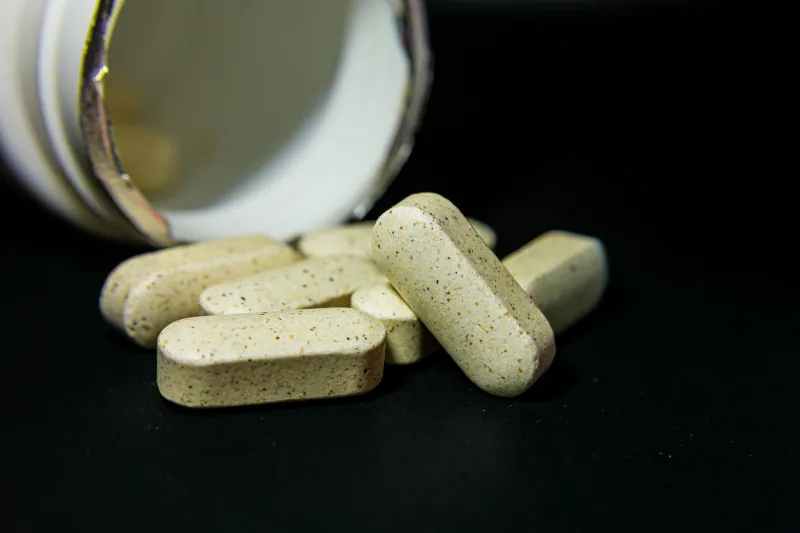
Walk through the health aisle of any Canadian pharmacy or grocery store and the shelves offer an extraordinary variety: St. John's Wort capsules, fish oil softgels, melatonin tablets, echinacea tinctures, magnesium glycinate, CoQ10, and dozens of other products marketed under the banner of wellness. Health Canada regulates these items as Natural Health Products (NHPs) under a framework distinct from prescription drugs — they carry an eight-digit Natural Product Number (NPN) and must meet defined standards for safety and quality.
But regulation does not mean harmlessness, and the growing volume of Canadians who use NHPs alongside prescription medications has created a patient safety concern that pharmacists across the country describe as one of the most underappreciated risks in their practice.
Why "Natural" Is Not a Synonym for "Safe to Combine"
The pharmacological assumption underlying many patients' supplement use is intuitive but flawed: natural products come from plants or food sources, and therefore they behave differently from pharmaceutical compounds. In reality, many natural health products are pharmacologically active — they interact with the same enzyme systems, receptor pathways, and transport proteins that prescription drugs use.
The cytochrome P450 enzyme system, which the liver uses to metabolise a large proportion of prescription medications, is a central site of interaction. Several widely used NHPs either inhibit or induce these enzymes, which alters how quickly a drug is broken down in the body. An inhibited enzyme means the drug accumulates to higher concentrations than intended. An induced enzyme means the drug is cleared faster, reducing its effectiveness.
These are not theoretical concerns. They are documented in peer-reviewed pharmacology literature and observed in clinical practice across Canada.
Common Interactions That Canadian Patients Frequently Overlook
St. John's Wort and antidepressants or anticoagulants
St. John's Wort (Hypericum perforatum) is one of the most studied and most clinically significant NHP-drug interactions in the world. It is a potent inducer of CYP3A4 and P-glycoprotein, two critical components of drug metabolism and transport. When taken alongside selective serotonin reuptake inhibitors (SSRIs) — among the most commonly prescribed medications in Canada — it can cause serotonin syndrome, a potentially life-threatening condition characterised by agitation, rapid heart rate, muscle rigidity, and in severe cases, seizures.
In patients taking warfarin, an anticoagulant used to prevent blood clots, St. John's Wort can reduce drug levels significantly, increasing the risk of stroke or thrombosis. The interaction is serious enough that Health Canada has issued formal advisories about it.
Fish oil and blood thinners
Omega-3 fatty acid supplements, sold ubiquitously under the fish oil label, have antiplatelet properties at higher doses. For patients already taking anticoagulants such as warfarin, apixaban, or rivaroxaban, adding high-dose fish oil can increase bleeding risk. The interaction is dose-dependent — low doses may pose minimal risk, but patients taking three grams or more per day alongside anticoagulation therapy warrant close monitoring.
Magnesium, calcium, and certain antibiotics or thyroid medications
Divalent cations — including magnesium and calcium — can bind to certain medications in the gastrointestinal tract, reducing their absorption. This is particularly relevant for fluoroquinolone and tetracycline antibiotics, where co-administration with mineral supplements can substantially reduce the antibiotic's effectiveness. Similarly, calcium supplements taken within four hours of levothyroxine — widely prescribed for hypothyroidism — can impair thyroid hormone absorption and destabilise what is otherwise a carefully titrated dose.
Melatonin and sedative medications
Melatonin is among the most commonly used sleep supplements in Canada. When combined with benzodiazepines, Z-drugs (such as zopiclone), or other central nervous system depressants, melatonin may potentiate sedation. For elderly patients — who are already at elevated risk for falls and cognitive effects from sedative medications — this additive effect carries meaningful consequences.
Grapefruit and grapefruit-adjacent supplements
Many Canadians are aware that grapefruit juice interacts with certain medications. Fewer are aware that some supplements — including bitter orange (Citrus aurantium), found in several weight management products — contain compounds with similar enzyme-inhibiting properties. Medications affected include certain statins, calcium channel blockers, and immunosuppressants.
Why Patients Don't Disclose — and Why That Needs to Change
Pharmacists report that a significant proportion of patients do not voluntarily mention their supplement use during medication reviews. The reasons are varied: some patients do not consider NHPs to be "real" medications worth mentioning; others worry about being judged for using alternative health approaches; still others genuinely do not connect their supplement use to their prescription care.
The practical consequence is that pharmacists reviewing a patient's drug profile for interactions are working with incomplete information. An interaction that would have been flagged — and potentially avoided — goes undetected because the supplement was never entered into the patient's file.
Health Canada's regulatory framework for NHPs, while rigorous by international standards, does not require the same depth of post-market pharmacovigilance as prescription drugs. This means that emerging interaction signals may take longer to surface in official guidance.
What Disclosure Actually Looks Like in Practice
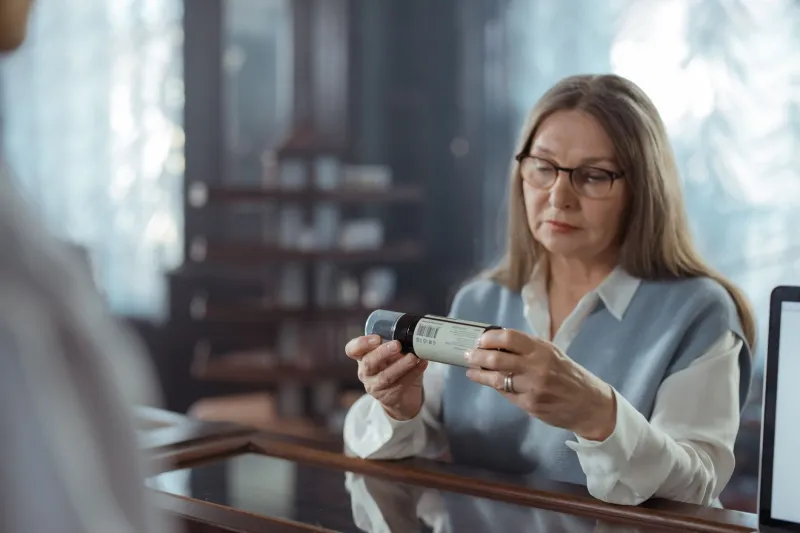
Telling your pharmacist about your supplements does not require a detailed presentation. At your next prescription pickup or medication review, bring the bottles or a written list of everything you take — prescription medications, over-the-counter drugs, vitamins, herbal products, and protein powders. Dosages matter, as some interactions are dose-dependent.
If you are starting a new prescription, proactively ask: "Are there any supplements I currently take that I should be aware of?" This frames the conversation in a way that invites clinical guidance rather than judgment.
For patients who use a single pharmacy consistently, the medication review process — covered under most provincial pharmacist billing frameworks — is an appropriate setting for a thorough supplement discussion. These reviews are more structured than a counter interaction and allow the pharmacist to assess the full picture of what you are taking.
A Shared Responsibility
The responsibility for managing supplement-drug interactions does not rest solely with the patient. Prescribers should ask about NHP use during clinical assessments, and pharmacists should routinely prompt patients on this topic rather than waiting for it to be volunteered. But in a healthcare system where appointment times are short and pharmacy counters are busy, patients who come prepared — with a complete and honest list of what they are taking — are the most likely to receive the guidance they need.
Natural health products are not inherently dangerous. Many offer genuine benefits and are used responsibly by millions of Canadians. The issue is not the products themselves, but the assumption that they exist outside the pharmacological conversation. They do not. And treating them as part of that conversation — with your pharmacist, your physician, and yourself — is one of the most straightforward things you can do to protect your health.